
Happy Kalends of Iunius! Are you ready for Iuno Moneta? She's ready for you!
Robby has managed to put in a temporary fix for the site errors and things failing to refresh or not showing up where they should! The permanent fix is going to need Mark's experience, and unfortunately -- seriously, this literally never fails -- Mark has been on an international flight all day, because of course he has. (Never. Fails. He and I are not allowed to both take vacation at once.)
The site will work just fine with the temporary fix in place, things just might be a little slow here and there. We'll keep you updated.
![[syndicated profile]](https://www.dreamwidth.org/img/silk/identity/feed.png) followmehere_feed May. 31st, 2026 06:16 pm)
followmehere_feed May. 31st, 2026 06:16 pm)
‘Pessimism is probably “a bigger problem than climate change”, said the novelist Ian McEwan on Monday afternoon, as temperatures broke May records in the UK.
McEwan “constantly” hears people say that they don’t “expect their children to have as good a life as they did”, but suggested that optimism is a “moral duty”.
McEwan’s latest book, What We Can Know, is partly set in 2119, in a Britain submerged by seas. He spoke at the Hay festival on a panel alongside the former NFU president Minette Batters and Sandi Toksvig, on a day that saw temperatures in London reach 34.8C, beating a May record set in 1922.
McEwan went on to say that optimism is an “exercise in rationality”, because it’s “quite possible” – given that “the world is big, cultures are diverse” – that “there could be a revolution happening and we don’t even know about it”.…’ (Ella Creamer via The Guardian)
followmehere_feed May. 31st, 2026 05:41 pm)‘In the event of an imminent nuclear apocalypse, we suspect that many people who have access to private jets will immediately take to the skies and escape city centers. This site tracks this indicator in realtime. The current emergency level is reported on a scale of 1 to 5, with 5 being an indicator of a likely imminent apocalypse. built by Kyle McDonald…’ (via ews.kylemcdonald.net
followmehere_feed May. 31st, 2026 01:54 pm)
‘Democrats are in thrall to the idea that corporate consolidation is America’s biggest, and maybe only, problem.…’ (Jonathan Chait via The Atlantic)
Chait, who has had a career as a political reporter at The New Republic, New York and The Atlantic, argues that anti-monopoly thinking has become a dominant force in Democratic economic policy, driven largely by the Open Markets Institute and its central figure, Barry C. Lynn, who sees corporate consolidation as the root of much of America’s social, political, and economic dysfunction. In Chait’s view, this dangerously monocausal worldview moved antitrust politics to the center of the Biden administration, particularly through the influence of Lynn’s protégé Lina Khan, appointed to the Federal Trade Commission. For this movement, antitrust is not merely a narrow matter of consumer prices but part of a broader project to decentralize power and curb corporate dominance.
Chait regards this emphasis as useful but badly overextended. He argues that it neglects other sources of contemporary dysfunction, including inflation, social-media addiction, cultural alienation, political polarization, and the Democratic Party’s loss of working-class support. If allowed to dominate policy, he warns, the anti-monopoly framework would be intellectually erosive, politically divisive, and likely to fail. Its vocabulary of resentment toward concentrated power may be emotionally satisfying, but Chait sees it as risking the rupture of older Democratic coalitions while failing to deliver the salvation it promises.
followmehere_feed May. 31st, 2026 01:45 pm)I am reprinting this, from colleague Dr Henry Abraham, in its entirety. He thoughtfully articulates concerns I share.
Dear Dr. Barbabella:
I am concerned that you have examined President Donald J. Trump for the third time since last January, even as the White House called your assessment on May 26 an “annual dental and health checkup,” and despite the president’s claim that “everything checked out PERFECTLY. Three days after your evaluation you claimed that he “remains in excellent health, demonstrating strong cardiac, pulmonary, neurological, and overall physical function.”
The American people don’t seem to be buying that story. A recent poll showed that 59% of Americans feel he lacks the mental acuity for his position, hardly a vote of confidence in the president’s self-assessment.
In my experience as a physician, it’s uncommon for a healthy person to require a medical evaluation three times in a year. Certainly the ecchymoses in his hands are a tell. It may be a sign of aging. If it’s from handshaking, as you suggested, why in both hands? If it’s from prescribed aspirin, Harvard emergency physician Jeremy Faust wondered if a high dose was because you were trying to prevent a heart attack. What about his edematous ankles? Venous insufficiency is your diagnosis, but that’s relatively uncommon in men. Have you ruled out right sided heart failure, or is he taking a drug like amlodipine that also causes swollen ankles? Your credentials as a combat surgeon are exemplary, but there may be other medical specialists who might help in dealing with an especially challenging case.
As a psychiatrist I have concerns about his mental status which appears to have worsened in the last year. Why has he taken the MOCA test of cognitive abilities three times since 2018? Is the president slowly declining, or is his mental function dropping off a cliff? The danger posed by his apparent psychiatric decline is compounded by his unfettered access to our vast nuclear arsenal. Like any patient with advancing dementia, there’s a time when the car keys have to be taken away. I fear the president is at that point, and should be lawfully removed from office. I base this extraordinary request on my observations of his increasingly poor judgment, reduced impulse control, rage attacks, grandiosity, feelings of omnipotence, and his growing intoxication with nuclear weapons over which he alone has control.
As a specialist in substance use disorders I recommend, if you have not already done this, a urine tox screen on the president. He has an admittedly thinly sourced history of abusing psychostimulants since 1992. I have previously described a photo of the president with dilated pupils, a singularly abnormal finding in an elderly man under normal room illumination. Was this from a stimulant? In my clinical experience a tox screen would be indicated in any patient presenting this way, especially if he described nocturnal tweeting frenzies, grandiosity, paranoia, and daytime sleepiness consistent with stimulant withdrawal.
Other specialists who may be helpful in this complex case include hematologists, neurologists, and infectious disease experts. His black and blue hands bespeak a bleeding disorder. Aggressive use of aspirin may be the culprit, but have you ruled out blood dyscrasias such as the leukemias or platelet disorders?
While there are a number of red flags that appear to presage dementia, such as difficulties in speech, logic, calculations, and orientation in space, they are intermittent. You might argue that occasional mental lapses are part of being nearly 80. But a cluster of them even when intermittent is worrisome, especially when mixed with disinhibition, rage, and access to weapons of mass destruction. Missing from the public record are the actual scores of his three prior MOCA screens for cognitive decline. As you know the MOCA is a rapid screen taking ten or so minutes to complete. I strongly recommend a more thorough neuropsychological battery to assess the president’s ability to remember, pay attention, solve problems, and use language.
The patient’s father developed a dementia in later life which was diagnosed as “Alzheimer’s disease.” But his emotional disinhibition was more consistent with frontotemporal dementia, or FTD. The frontal lobes of the brain, shown below in dark blue, help you plan, organize, observe social graces, and exert good judgement. The temporal lobes, in light blue, deal with memory, language, and modulating anxiety and rage.
If his father’s dementia was the FTD type, the president has a 25 to 50% chance of developing the same illness. FTD patients exhibit apathy, poor judgement, and speech difficulties.
As you know, there are other causes of dementia. e.g. the vascular type from small blood clots in the brain. Brain imaging can put those concerns to rest, and so I was disappointed when last October you elected only to perform an MRI study of the president’s cardiovascular system. Brain MRI, PET, and/or SPECT scans are long overdue.
Last on my short list of rule-out diagnoses is neurosyphilis which in the U.S. from 2019 to 2023 increased 61%. It is not a stretch of one’s imagination to consider that the current president has a history of unprotected sex with infected partners. Neurosyphilis can linger for years without being detected. Undetected it can progress to a dementia with an expansive demeanor and grandiose delusions, symptoms we see in Donald Trump today. A simple blood and spinal fluid test can lay this possibility to rest.
Most importantly is that while you have a duty to protect the president’s privacy, you have a far greater duty to protect the common good. You have served your country on the battlefield. Now you are called upon to render Americans and the world a far greater service.
Sincerely,
followmehere_feed May. 31st, 2026 03:35 am)
‘The president had earlier said on social media that he should take the place of “these highly paid, Third Rate ‘Artists,’” saying he gets “larger audiences than Elvis.”…’ (Derrick Bryson Taylor via The New York Times)
followmehere_feed May. 31st, 2026 03:33 am)
‘Mr. Trump railed against the judge’s ruling in an incensed social media post, suggesting that he was considering casting the Kennedy Center aside as one of his personal projects. The president wrote that unless he was free to decide the center’s trajectory, he had “no interest in continuing what could only be a hopeless journey.”
“Unfortunately, Judge Cooper and the Radical Left would rather see it DIE than have President Trump transform it into something that everyone could be proud of, much as I have done, in many cases, throughout my life,” he wrote.…’ (Julia Jacobs via The New York Times)
followmehere_feed May. 31st, 2026 03:30 am)
‘A huge noise rattled part of the state on Thursday. Multiple theories have been put forward, but the mystery remains.…’ (Victor Mather via The New York Times)
Unlike today’s event off the Massachusetts coast, NASA said Thursday’s was not caused by a meteor, having received no reports of a fireball and no satellite detection of a meteor in the area.
followmehere_feed May. 31st, 2026 03:22 am)
Seen and heard up and down the Eastern Seaboard from Quebec and northern VT down to Delaware and Maryland (via American Meteor Society; thanks, Abby)
followmehere_feed May. 30th, 2026 05:43 pm)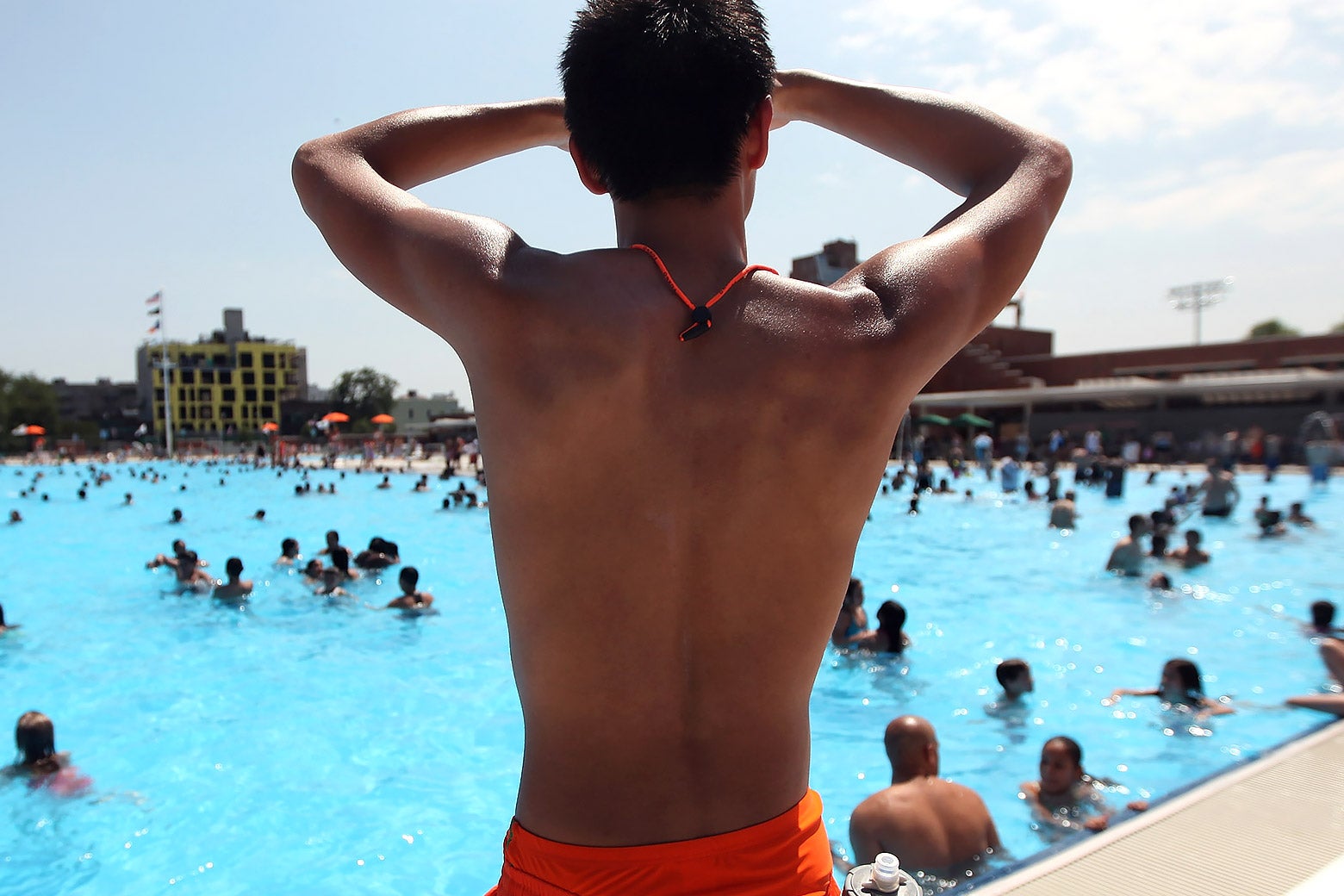
‘The Instinctive Drowning Response – so named by Francesco A. Pia, Ph.D., is what people do to avoid actual or perceived suffocation in the water. And it does not look like most people expect. There is very little splashing, no waving, and no yelling or calls for help of any kind. To get an idea of just how quiet and undramatic from the surface drowning can be, consider this: It is the number two cause of accidental death in children, age 15 and under (just behind vehicle accidents) – of the approximately 750 children who will drown next year, about 375 of them will do so within 25 yards of a parent or other adult. In ten percent of those drownings, the adult will actually watch them do it, having no idea it is happening. Drowning does not look like drowning – Dr. Pia, in an article in the Coast Guard’s On Scene Magazine (Fall 2006 page 14), described the instinctive drowning response like this:
- Except in rare circumstances, drowning people are physiologically unable to call out for help. The respiratory system was designed for breathing. Speech is the secondary or overlaid function. Breathing must be fulfilled, before speech occurs.
- Drowning people’s mouths alternately sink below and reappear above the surface of the water. The mouths of drowning people are not above the surface of the water long enough for them to exhale, inhale, and call out for help. When the drowning people’s mouths are above the surface, they exhale and inhale quickly as their mouths start to sink below the surface of the water.
- Drowning people cannot wave for help. Nature instinctively forces them to extend their arms laterally and press down on the water’s surface. Pressing down on the surface of the water, permits drowning people to leverage their bodies so they can lift their mouths out of the water to breathe.
- Throughout the Instinctive Drowning Response, drowning people cannot voluntarily control their arm movements. Physiologically, drowning people who are struggling on the surface of the water cannot stop drowning and perform voluntary movements such as waving for help, moving toward a rescuer, or reaching out for a piece of rescue equipment.
- From beginning to end of the Instinctive Drowning Response people’s bodies remain upright in the water, with no evidence of a supporting kick. Unless rescued by a trained lifeguard, these drowning people can only struggle on the surface of the water from 20 to 60 seconds before submersion occurs.…’(via Mariovittone)
followmehere_feed May. 30th, 2026 04:32 pm)
- ‘The global average Corruption Perceptions Index (CPI) score fell to 42 out of 100, the first decline in more than a decade.
- Only five countries now score above 80, down from 12 a decade ago.
- The U.S. ranks 29th with a score of 64, its lowest-ever result in the index.…’ (Srijaa Chatterjee via Visual Capitalist)
followmehere_feed May. 30th, 2026 04:07 pm)
‘We critically examine proposals for the so-called warp-drive spacetimes and classify these models based on their various restrictions within the framework of General Relativity. We then provide a summary of general formalism for each class, and in the process, we highlight some misconceptions, misunderstandings, and errors in the literature that have been used to support claims about the physicality and feasibility of these models. On the way, we prove several new no-go theorems. Our analysis shows that when the principles of General Relativity are applied correctly, most claims regarding physical warp drives must be reassessed,
and it becomes highly challenging to justify or support the viability of such models, not merely due to the violation of energy conditions.…’ (via Arxiv)
followmehere_feed May. 30th, 2026 04:01 pm)
‘For some Americans’ finances, the Iran war was over almost as soon as it began. Those with access to stocks — a majority of Americans have some, though the ultrawealthy have most — saw the S&P 500 dip about 8% when the war started, only for it to bounce 19% starting in late March, more than making up its losses. The index is now up 10.7% for the year, which if it held would make for the fourth consecutive year of double-digit stock increases.
President Donald Trump has been quick to trumpet these gains. “We have 401(k)s at their all-time high, highest they’ve ever been, and that goes along with the stock market, which is the highest it’s ever been,” Trump said at a televised Cabinet meeting this week, repeating a refrain he has adopted to celebrate market wins. That is all despite the war, he said.
But as Trump — along with anyone who has to put gas into their car — also knows, the real economic weight of the war is much heftier than lofty stock prices would suggest. The war is heightening an already historic disconnect between those who can share in the affluence spun off by U.S. financial markets and those who can’t. That is aggravating Americas’ frustrations with the president’s economic performance, and likely will weigh on his fellow Republicans’ performance in November’s midterm elections. …’ (Matt Peterson via CNBC)
followmehere_feed May. 30th, 2026 03:59 pm)
‘Particles of light cannot be divided into smaller particles, but if you try to snip off the end of one, instead of shortening it multiplies…’ (Karmela Padavic-Callaghan via New Scientist)
followmehere_feed May. 30th, 2026 03:56 pm)
‘For years now, President Donald Trump has been showing off a signature dance move at events and campaign rallies, jerking his bent arms and clenched fists forward and backward, often to the sound of the Village People’s “YMCA.”HPGam.cmd.push(function(){
return HPGam.render(“inline-1”, “entry_paragraph_1”, false, false);
});The dance is a regular feature when he’s onstage — so much so that it has become part of his signature brand, experts told HuffPost.“It’s typically the same exact song and it’s the same exact set of moves, and he’s typically doing it when he’s wearing the blue suit, the white shirt and the red tie, so it’s part of his brand,” said Patti Wood, a body language expert and author of “Snap: Making the Most of First Impressions, Body Language, and Charisma.” “One of the reasons it is so interesting to observe is that we know exactly what he’s going to do, and yet we look at it every time [and try] to understand.”This “very on brand for him” move is even a “visual version” of his speech patterns, said Denise Dudley, a clinical psychologist and behavioral expert. “If we think about it a certain way, he dances like he talks,” Dudley said. “It’s super repetitive, it’s really simple. I mean, it’s not complicated at all.”…’ (Jillian Wilson via HuffPost)
followmehere_feed May. 30th, 2026 03:39 pm)
‘In 2024, Donald Trump became the first former American president to be convicted of felony crimes as a New York jury found him guilty of all 34 charges in a scheme to illegally influence the 2016 election through a hush money payment to a porn actor who said the two had sex. (Trump received a no-penalty sentence, or unconditional discharge, just 10 days before his January 2025 inauguration to a second term.)…’ (via The Boston Globe)
followmehere_feed May. 30th, 2026 03:30 pm)
‘A new study suggests ChatGPT may stereotype you based on where you live, with the artificially-intelligent model classifying some locations as smarter, some as smellier and some as uglier or stupider.Researchers from the University of Oxford and the University of Kentucky asked OpenAI’s GPT-4o-mini model over 20 million questions between March and May of last year. They got the ChatGPT model to compare two places in order to get “a single, unambiguous consistent answer” about how it classifies certain states, according to researchers…’ (Monica Torres via HuffPost)
![[personal profile]](https://www.dreamwidth.org/img/silk/identity/user.png) wcg - Rabbit! Rabbit! Rabbit!
wcg - Rabbit! Rabbit! Rabbit!![[staff profile]](https://www.dreamwidth.org/img/silk/identity/user_staff.png) denise in
denise in ![[site community profile]](https://www.dreamwidth.org/img/comm_staff.png) dw_maintenance - (no subject)denise in dw_maintenance - (no subject)followmehere_feed - Ian McEwan says pessimism ‘a bigger problem than climate change’followmehere_feed - Apocalypse Early Warning Systemfollowmehere_feed - The Antitrust Theory of Everythingfollowmehere_feed - An Open Letter to the President’s Physicianfollowmehere_feed - Schadenfreude Dept.followmehere_feed - Schadenfreude Dept.followmehere_feed - What Exactly Caused That Loud Boom in South Carolina?followmehere_feed - Fireball eventfollowmehere_feed - To Keep in Mind at the Shore: Drowning Doesn’t Look Like Drowningfollowmehere_feed - Ask Google: “Is 2027 next year?”followmehere_feed - Mapped: The World’s Most and Least Corrupt Countriesfollowmehere_feed - General formalism, classification, and demystification of the current warp-drive spacetimesfollowmehere_feed - Analysis: The Iran war has made inequality worse. An end won’t fix itfollowmehere_feed - Photons behave very strangely if you try to cut themfollowmehere_feed - Body Language Experts Discuss What Trump’s Dancing Moves Revealfollowmehere_feed - Don’t Forget Today in History: Trump found guilty on 34 felony chargesfollowmehere_feed - New Study Suggests ChatGPT Has Hidden Geographic Biases
dw_maintenance - (no subject)denise in dw_maintenance - (no subject)followmehere_feed - Ian McEwan says pessimism ‘a bigger problem than climate change’followmehere_feed - Apocalypse Early Warning Systemfollowmehere_feed - The Antitrust Theory of Everythingfollowmehere_feed - An Open Letter to the President’s Physicianfollowmehere_feed - Schadenfreude Dept.followmehere_feed - Schadenfreude Dept.followmehere_feed - What Exactly Caused That Loud Boom in South Carolina?followmehere_feed - Fireball eventfollowmehere_feed - To Keep in Mind at the Shore: Drowning Doesn’t Look Like Drowningfollowmehere_feed - Ask Google: “Is 2027 next year?”followmehere_feed - Mapped: The World’s Most and Least Corrupt Countriesfollowmehere_feed - General formalism, classification, and demystification of the current warp-drive spacetimesfollowmehere_feed - Analysis: The Iran war has made inequality worse. An end won’t fix itfollowmehere_feed - Photons behave very strangely if you try to cut themfollowmehere_feed - Body Language Experts Discuss What Trump’s Dancing Moves Revealfollowmehere_feed - Don’t Forget Today in History: Trump found guilty on 34 felony chargesfollowmehere_feed - New Study Suggests ChatGPT Has Hidden Geographic Biases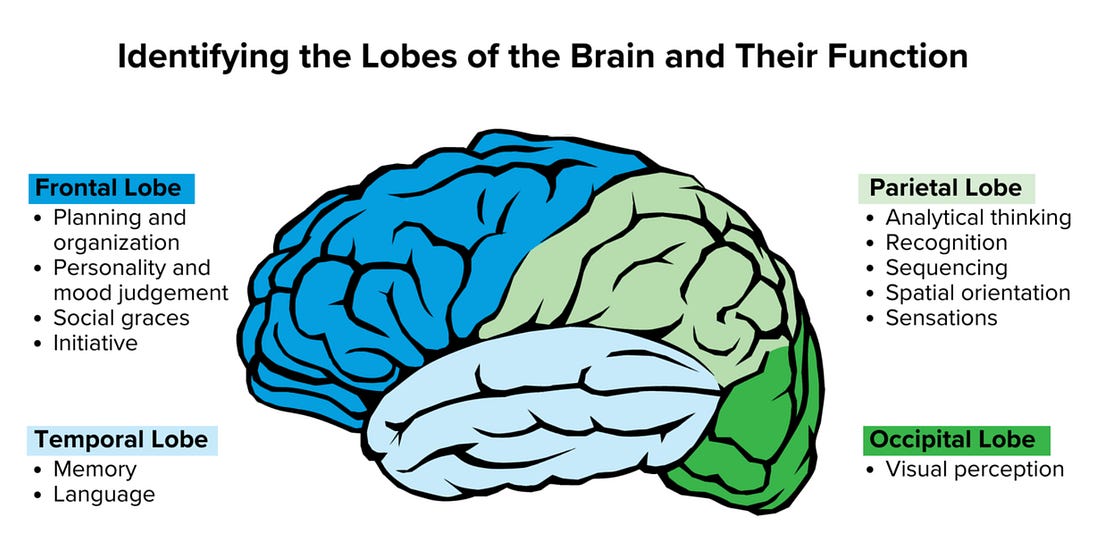

 (via
(via